
Sensor Open Systems Architecture™ (SOSA) Support
X-ES is a member of the SOSA™ Consortium and builds select products that are aligned with the SOSA Technical Standard.
Promoting Interoperability and Modularity
As Command, Control, Communications, Computers, Cyber-defense, Intelligence, Surveillance, and Reconnaissance (C5ISR) applications become increasingly sophisticated, they also become increasingly complex. Incorporating multiple components from multiple suppliers into any system always invites risk and expense, but because of the critical nature of sensor-based systems in aerospace and defense, failure is not an option and cost-effectiveness is crucial.
To confront these issues head-on, X-ES designs select VPX single board computers and supporting products to be aligned with The Open Group Sensor Open Systems Architecture™ (SOSA) Technical Standard. Spearheaded by the U.S. Department of Defense and developed in collaboration with government and industry, this platform-agnostic architecture ensures seamless interoperability, modularity, and long-term compatibility for X-ES products within the broader SOSA™ ecosystem.
Why SOSA?
Manufacturers of sensor-based systems stand to benefit greatly from consistent and agnostic design standards for key interfaces, but it’s also in the best interest of hardware suppliers like X-ES to adhere to the SOSA Technical Standard.
Benefits for Manufacturers
A non-proprietary standard for sensor systems saves time and money too often spent developing and testing reliable pathways between hardware components from multiple suppliers.
Consistency also allows for common technologies across platforms, makes change and obsolescence easier to manage, and offers more options for development and growth in government and military programs.
Benefits for Suppliers
Clear and consistent specifications put suppliers on an even footing and increase competition, and reusable connector architecture can drive down development overhead.
More predictable interoperability also cuts down on time-consuming support and expensive troubleshooting—savings that can be passed on to our customers.
Slot Profiles and Design Requirements
The SOSA Technical Standard defines consensus-based pinouts in the form of slot profiles for data processing and communication.
Each slot profile is a set of signals, pins, communications ports, and apertures along the backplane. By defining a small, carefully managed set of plug-in card profiles (PICPs) for 3U VPX and 6U VPX form factors, the SOSA Technical Standard allows for a broad range of functionality while reducing the overall number of backplane configurations.
Supported 3U VPX Profiles
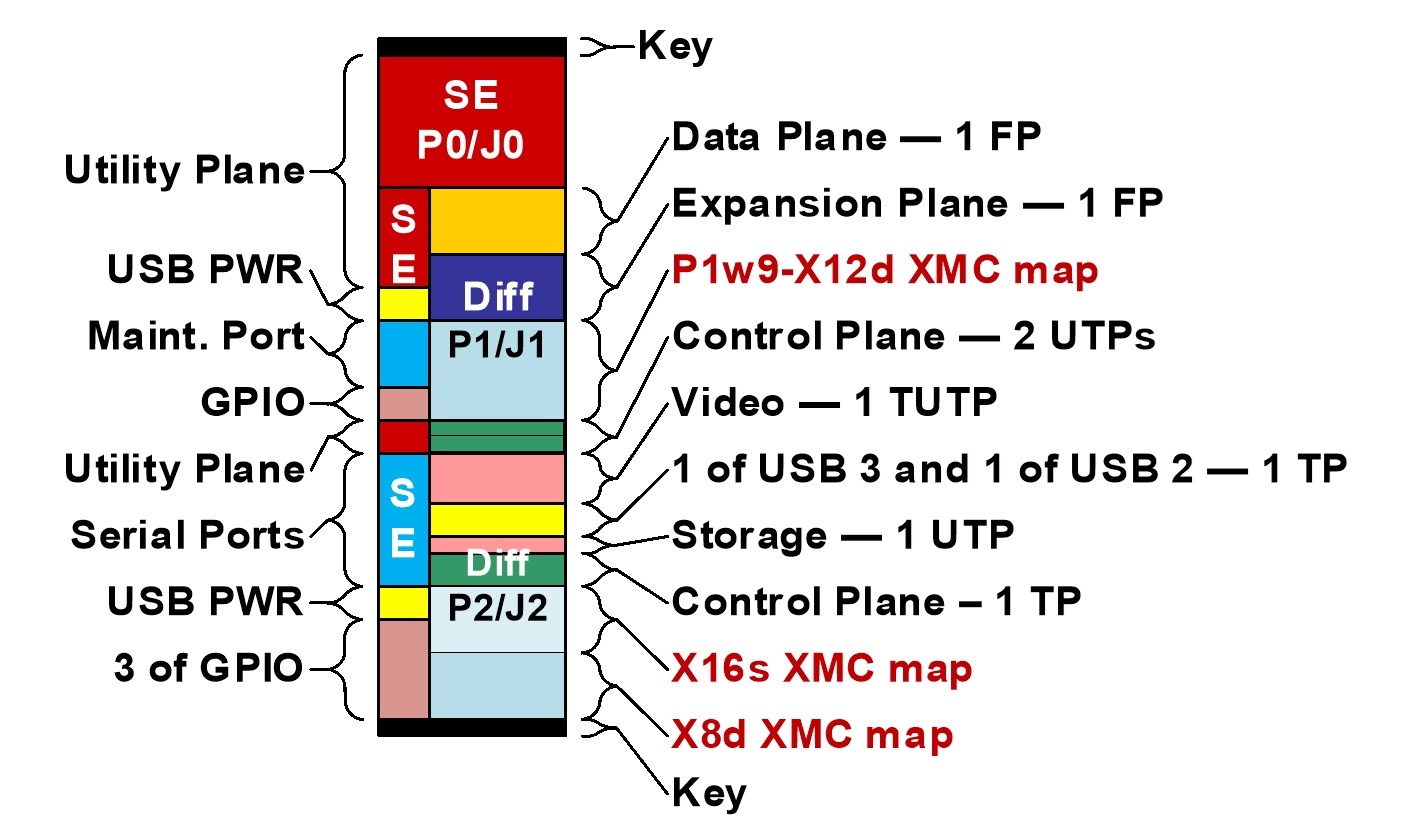
I/O Intensive
(14.2.16)
This profile is intended to support single board computers requiring a large number and variety of standard I/O interfaces, including USB, DisplayPort and other video, serial ports, and storage.
An optional XMC site is also provided for system-specific interfaces, allowing additional I/O to be added beyond what is defined by the SOSA slot profile.
View Aligned Products View Supporting RTM
View Supporting XPand1007 Dev Platform
View Supporting XPand1203 Dev Platform
View Supporting XPand1205 Dev Platform
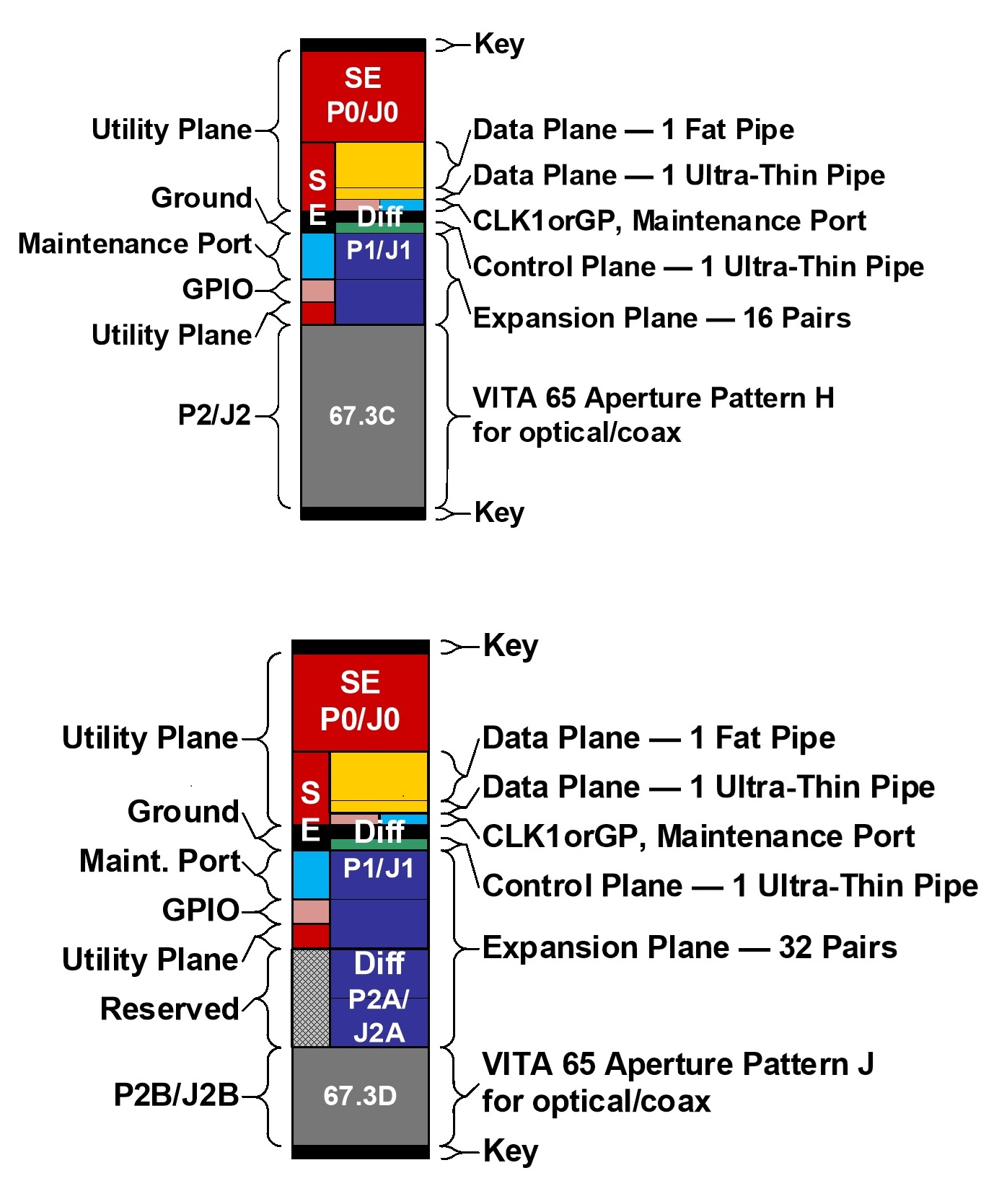
SOSA Slot Profile SLT3-PAY-1F1U1S1S1U1U4F1J-14.6.13-n (bottom)
Payload / Compute-Intensive
(14.6.11 & 14.6.13)
These profiles are intended to support exceptionally heavy-duty, high-bandwidth processing on single board computers, FPGAs, and RF transceivers. There are two related payload profiles: 14.6.11 is the standard, while 14.6.13 provides additional expansion planes.
Additionally, X-ES modules targeting the 14.6.13 profile can be configured to eliminate P2 entirely to align with 14.6.11, such as to provide compatibility if a backplane has the full P2 aperture installed but not used.
View Aligned Products View Supporting RTM
View Supporting XPand1007 Dev Platform
View Supporting XPand1203 Dev Platform
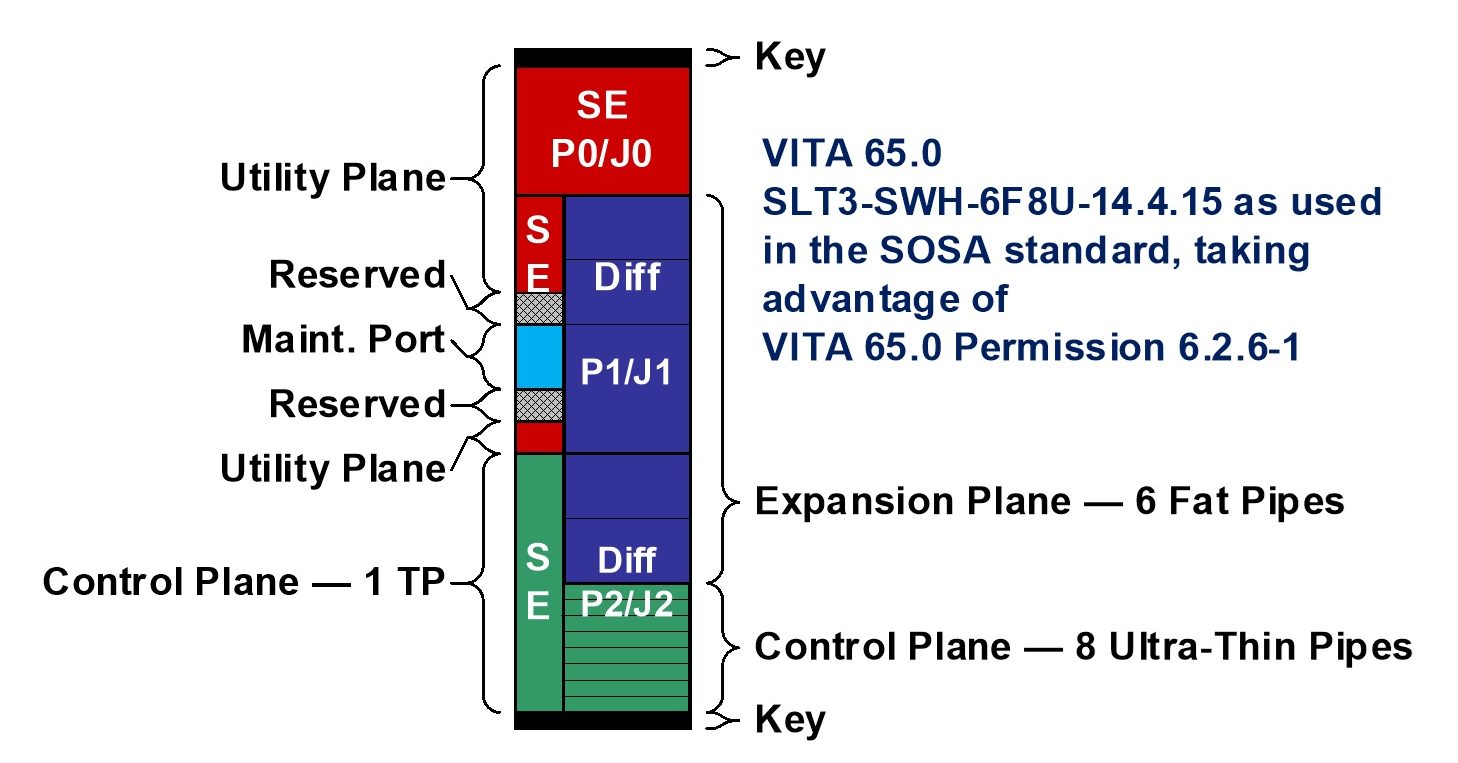
Switch (Expansion/Control Plane)
(14.4.15)
This profile is intended to support Ethernet switches. It is designed as an expansion plane switch but can also be used to switch the control plane.
View Aligned Products
View Supporting XPand1007 Dev Platform
View Supporting XPand1203 Dev Platform
View Supporting XPand1205 Dev Platform
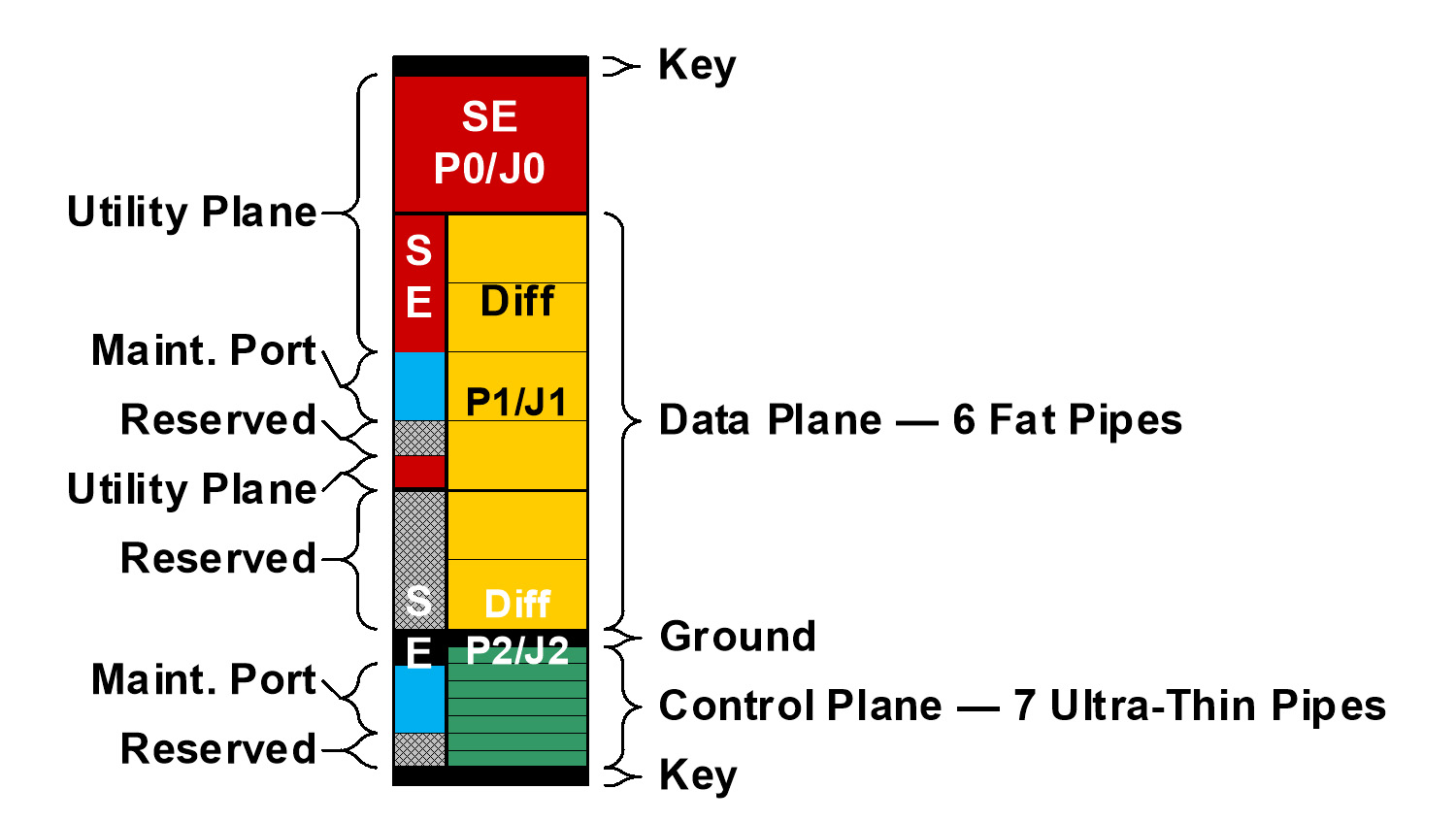
Switch (Data/Control Plane)
(14.4.14)
This profile is intended to support Ethernet switches. It is designed as a data plane switch but can also be used to switch the control plane.
This profile does not offer optical I/O but features two additional Data Plane fat pipes compared with slot profile SLT3-SWH-4F1U7U1J-14.8.7.
View Aligned Products
View Supporting XPand1007 Dev Platform
View Supporting XPand1203 Dev Platform
View Supporting XPand1205 Dev Platform
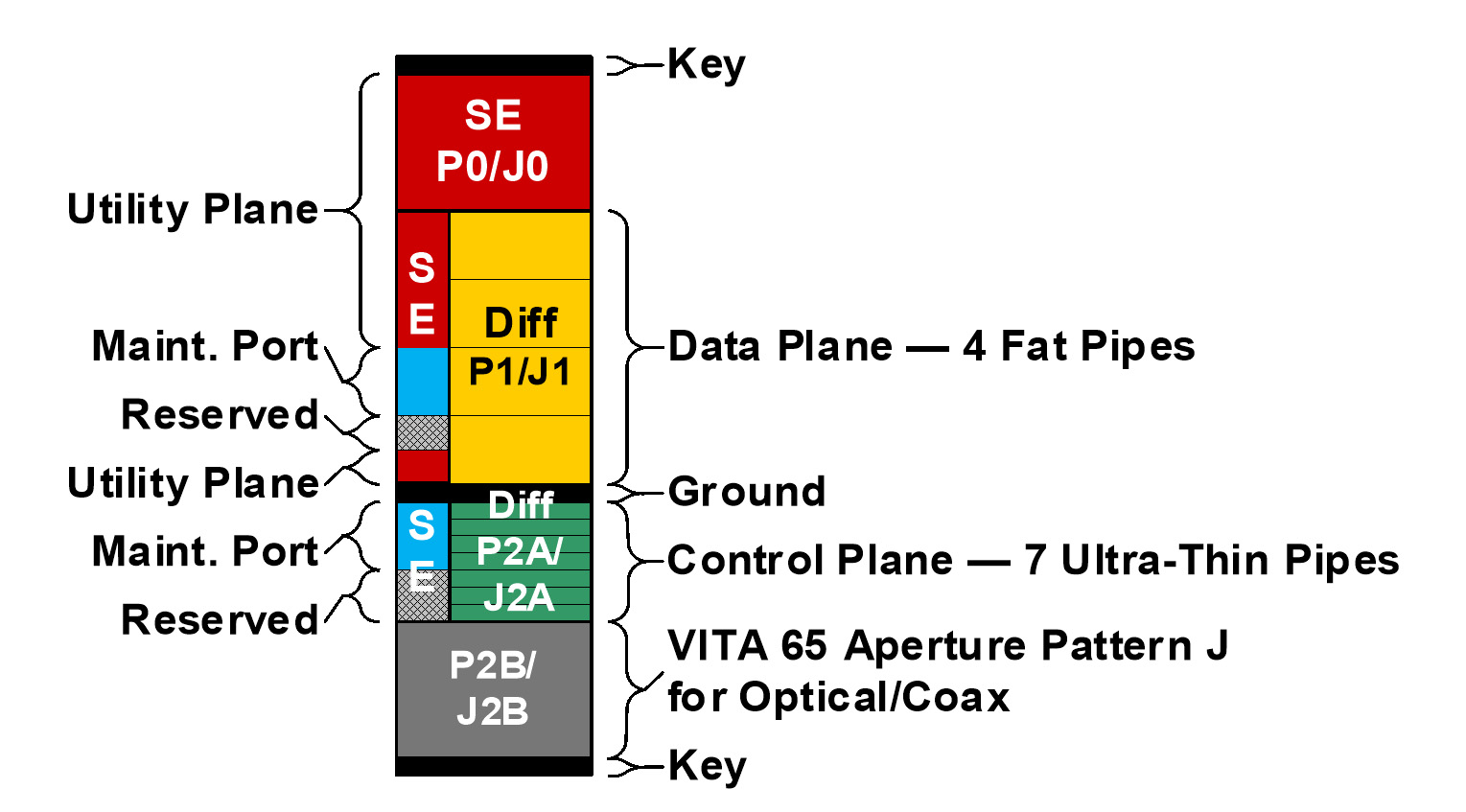
Switch (Data/Control Plane w/ Optical)
(14.8.7)
This profile is intended to support Ethernet switches. It is designed as a data plane switch but can also be used to switch the control plane.
This profile offers optical I/O but features two fewer Data Plane fat pipes compared with profile SLT3-SWH-6F1U7U-14.4.14.
Supported 6U VPX Profiles
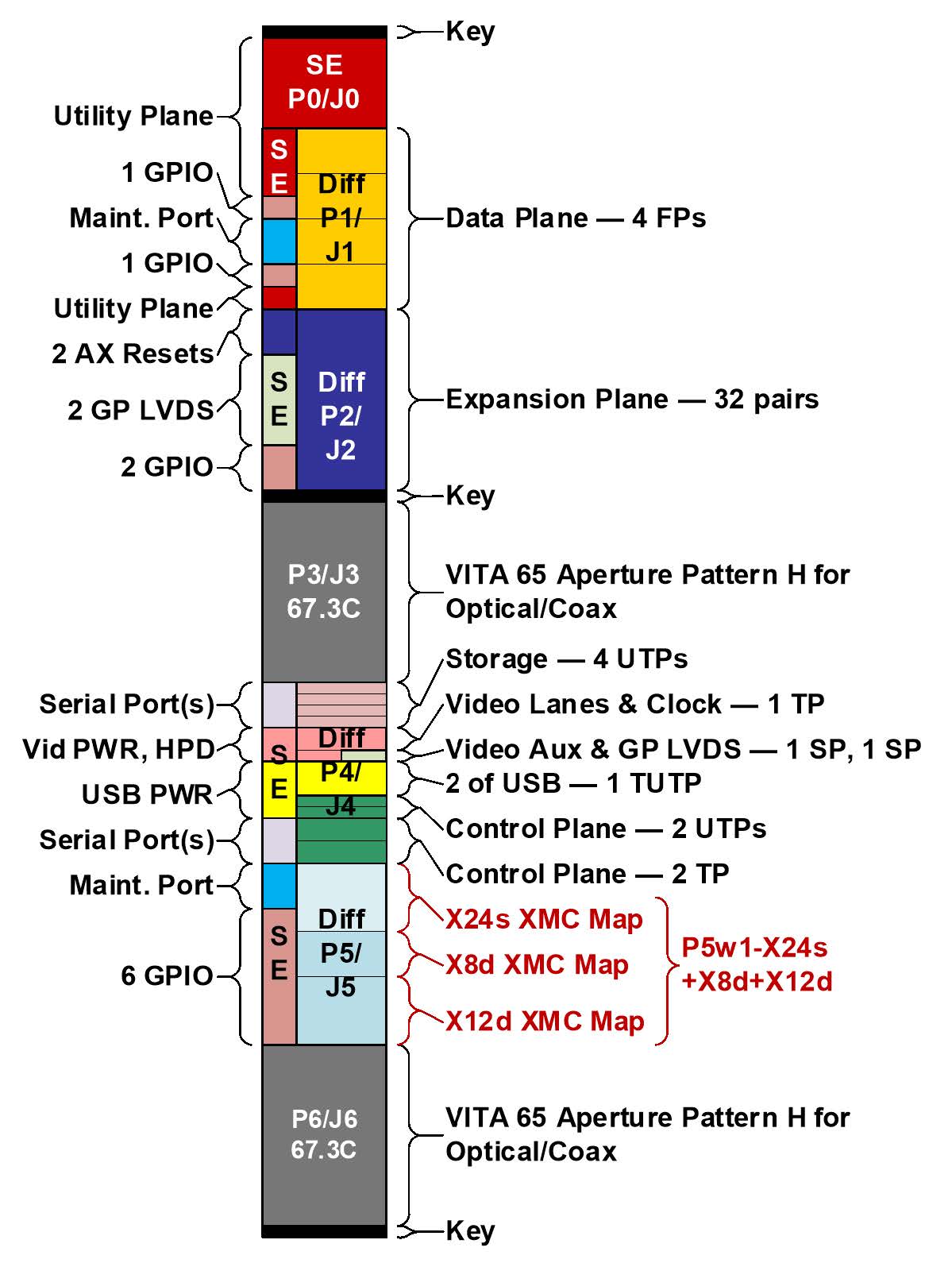
Payload (XMC)
(10.6.3)
The increased connector area of 6U VPX backplanes allows this profile to support both exceptionally heavy-duty, high-bandwidth processing as well as a large number and variety of standard I/O interfaces, including USB, DisplayPort and other video, serial ports, and storage.
An optional XMC site is also provided for system-specific interfaces, allowing additional I/O to be added beyond what is defined by the SOSA slot profile.
View Aligned Products View Supporting RTM
View Supporting XPand1015 Dev Platform
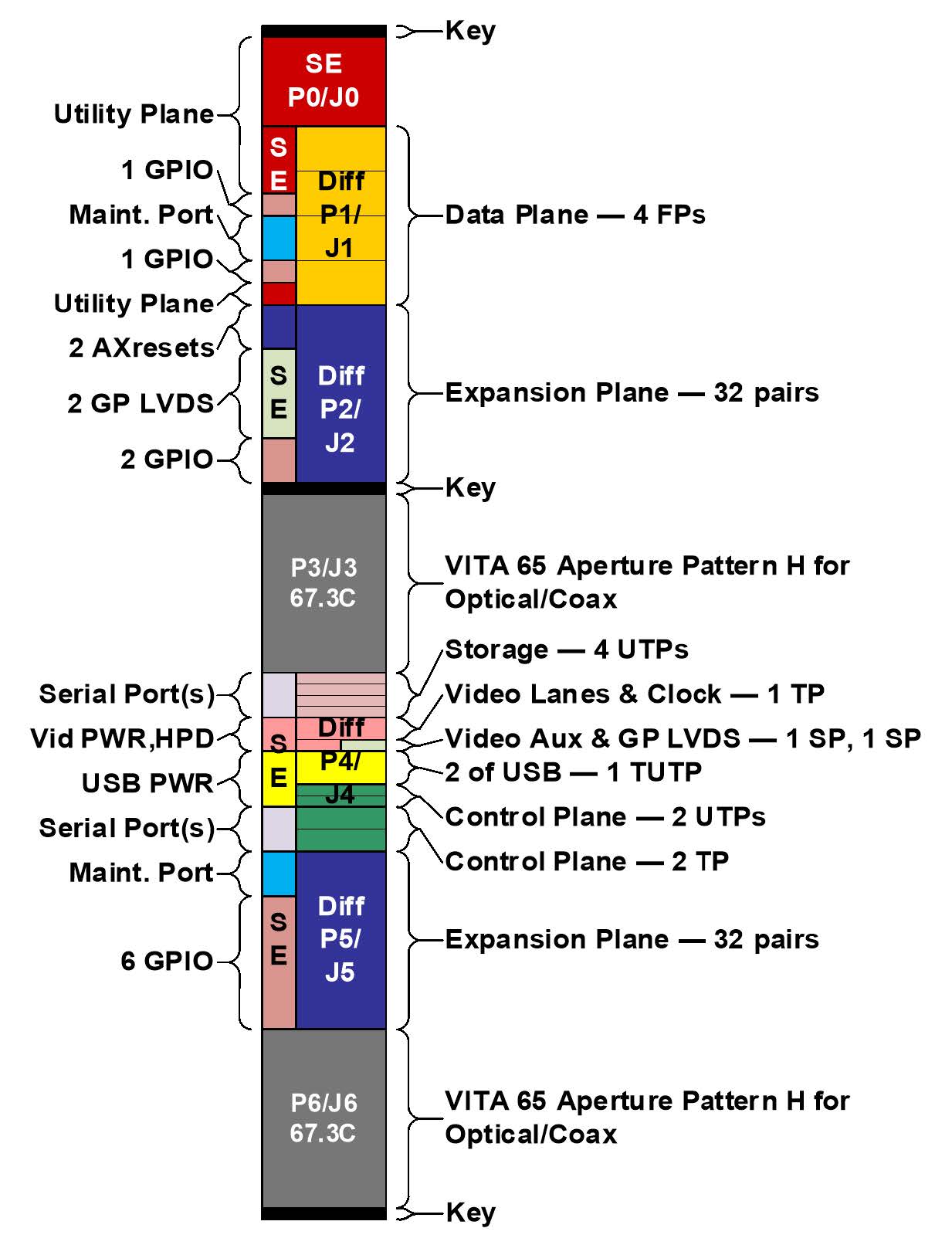
Payload (Expansion Plane)
(10.6.4)
The increased connector area of 6U VPX backplanes allows this profile to support both exceptionally heavy-duty, high-bandwidth processing as well as a large number and variety of standard I/O interfaces, including USB, DisplayPort and other video, serial ports, and storage.
This profile provides additional expansion planes instead of an optional XMC.
Start the SOSA Conversation
X-ES is an associate member of the SOSA Consortium and is ready to answer your questions about how our products align with the SOSA Technical Standard.
SOSA is a registered trademark of The Open Group.
Contact Sales